Short answer
Before ordering gold tableware, ask what the piece is made of, what the gold layer is and how thick it is, the purity, the weight, the dimensions, whether it is food-safe, how it should be cleaned and how long it takes. Get every answer in writing, because "gold" alone can mean very different things.
Gold goblets, tea sets, serving trays and bowls are objects for a table that people will look at and handle. They are also objects where the word “gold” can mean very different things. The questions below help you compare quotations fairly and avoid surprises.
1. What is the piece actually made of?
There are three common constructions:
- Solid gold. The whole object is a gold alloy of a stated karat. It is the most valuable and the heaviest.
- Gold over a base metal. The object is shaped from another metal and finished with a layer of gold, applied by plating or other methods.
- Gold leaf finish. Very thin sheets of gold are applied to a surface, often for decoration.
None of these is wrong, and each suits different uses and budgets. What matters is that you know which one you are buying and that the quotation says so. In several markets, consumer protection rules require a plated or layered item to be described as such rather than as solid gold, and an unqualified quality mark is meant only for solid gold of that fineness.
2. What purity is the gold?
If any part is gold, ask for the karat or fineness. Our guide to gold purity explains the numbers. For a plated or leaf finish, ask for the karat of the gold used and, for plating, the thickness of the layer, because this decides how long the finish lasts.
3. What does it weigh and how big is it?
Weight and dimensions are the two figures that most clearly separate one quotation from another. Ask for both, and ask whether the weight includes handles, lids, stands or decoration made of other materials. For a set, ask for the number and size of each part.
4. Is it suitable for food and drink?
This question is about use, not value. A piece intended for display is a different object from one intended to hold tea or water. Ask the maker whether the surfaces that touch food and drink are suitable for that purpose, and get the answer in writing.
5. How is it finished, and how do I care for it?
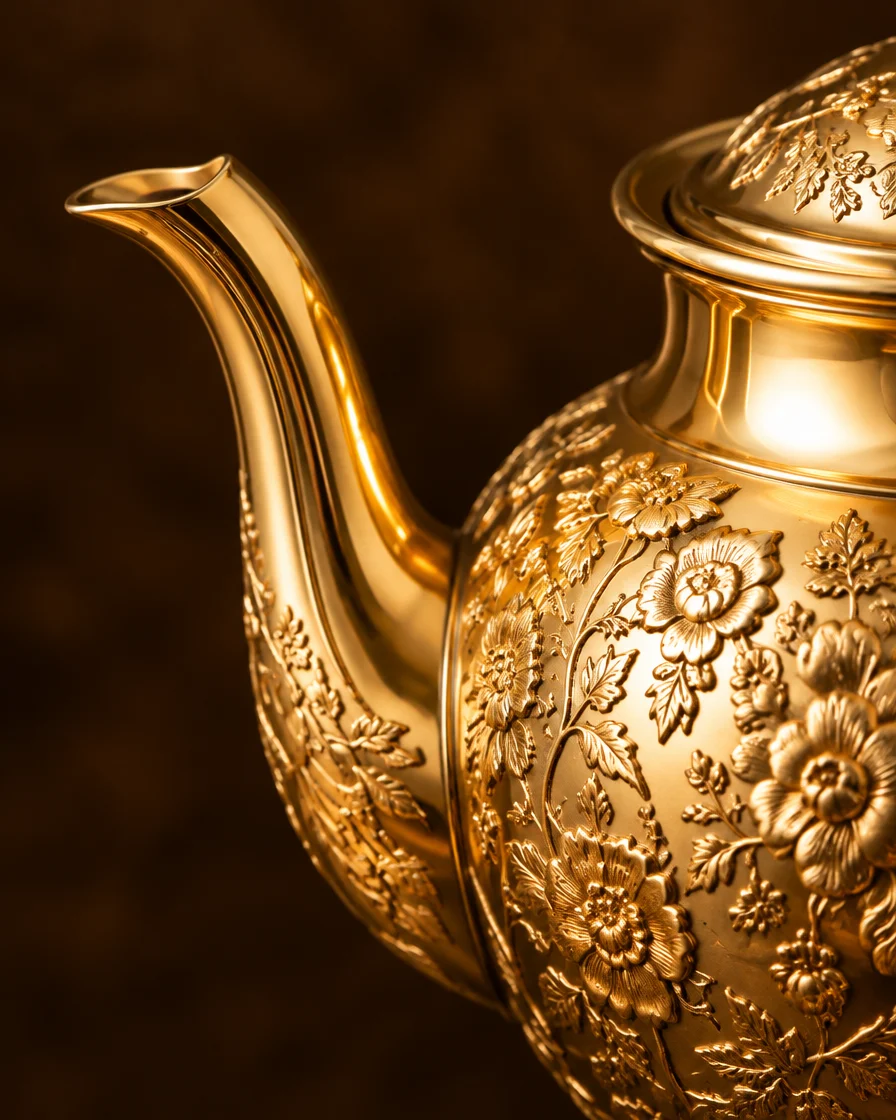
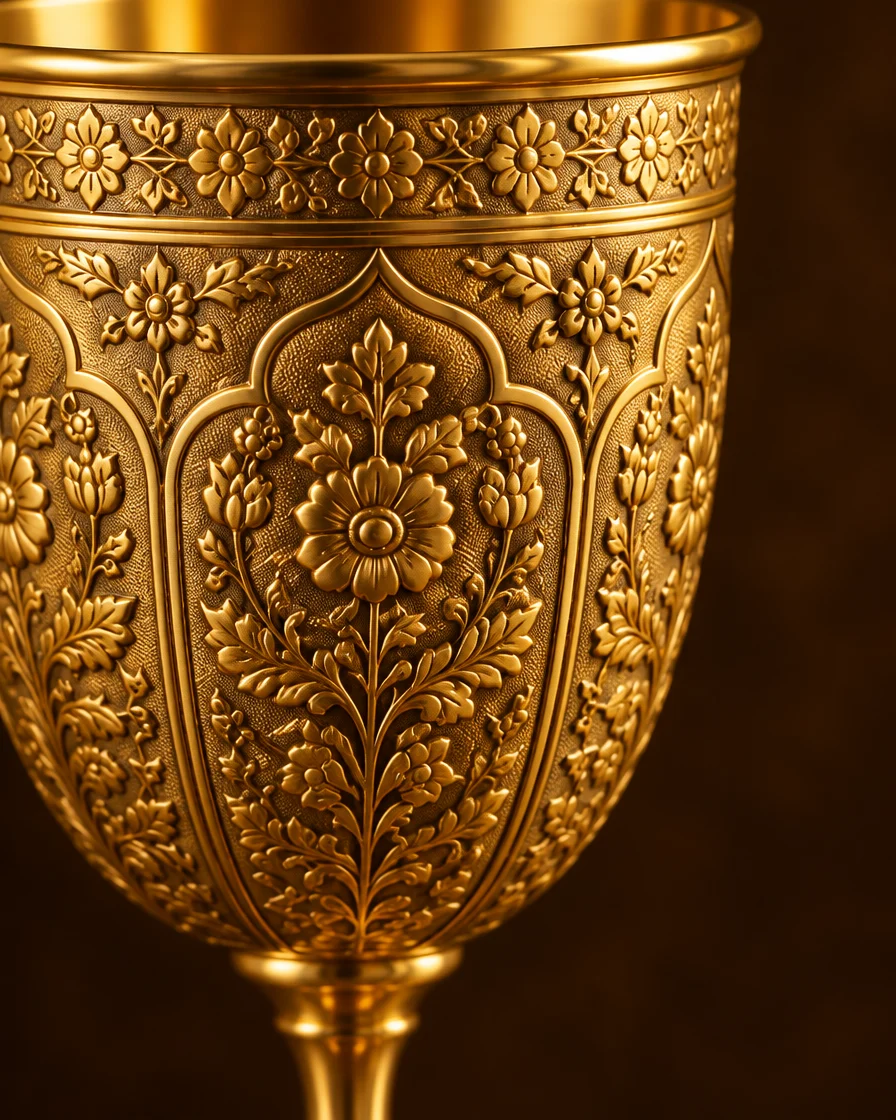
Ask about the surface: polished, matte, engraved, enamelled or antique-style. Ask how to clean it and what to avoid. Delicate finishes and decoration may not tolerate abrasives or soaking.
6. Can I see the design before it is made?
For made-to-order work, ask for drawings or photographs before production and again before shipping. This is especially important for engraving, names and calligraphy, where an error cannot easily be undone.
7. What is the timeline and the price?
Ask for the production time, the delivery date, the total price, the currency and the payment terms. Also agree who arranges shipping and pays for insurance and duties. Our shipping guide lists the points to settle.
Common mistakes buyers make
- Comparing price without construction. Two quotations for “a gold tea set” may describe one solid gold set and one gold plated set. Compare what the object is made of before you compare the price.
- Skipping weight and size. “A set of six goblets” is not a specification. Ask for the height, the capacity and the weight of each.
- Assuming display and everyday use are the same. Intricate engraving and applied decoration look wonderful but may collect dirt and be harder to clean. Say how you plan to use the piece.
- Leaving out the packaging. Heavy or fragile pieces need proper packing. Ask what is included, and whether a presentation box or case is available.
- Not checking the finish after delivery. Compare the finished piece with the approved photographs, and report any difference promptly.
A message you can send
When you send an inquiry, you can paste a short list like this: the piece you are interested in, the quantity, your country, whether you want solid gold or a gold finish and the purity if you know it, the weight and size you expect, whether it is for display or for use, any engraving, and the date you need it by. A message with these details lets the maker reply with a quotation that is easy to compare.
How this applies to Heritage Gold Craft
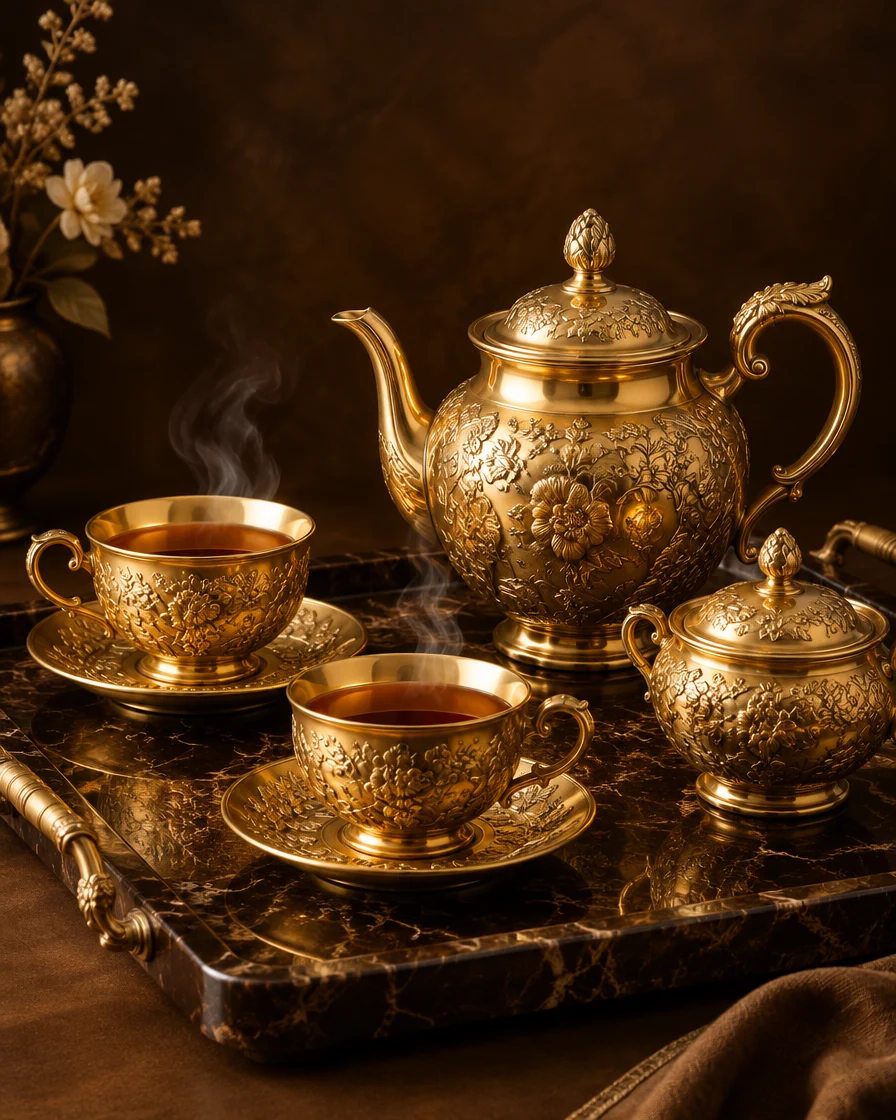
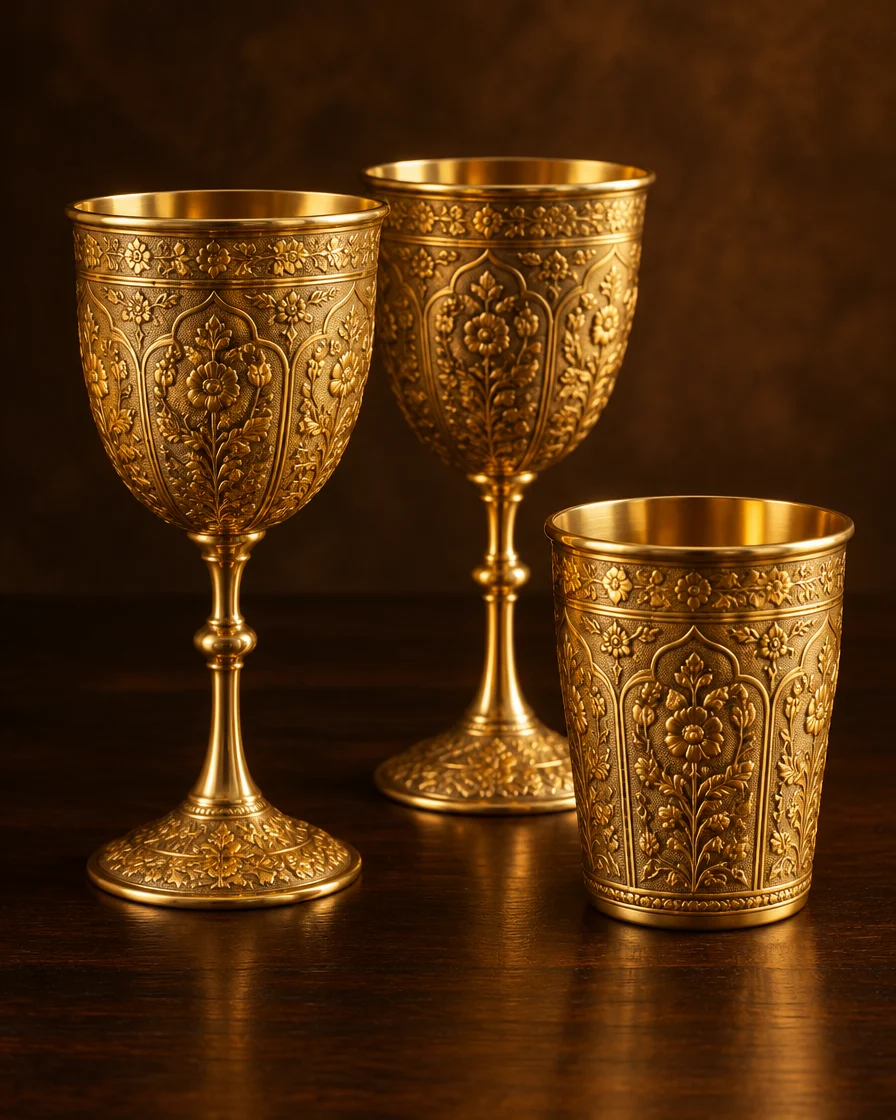
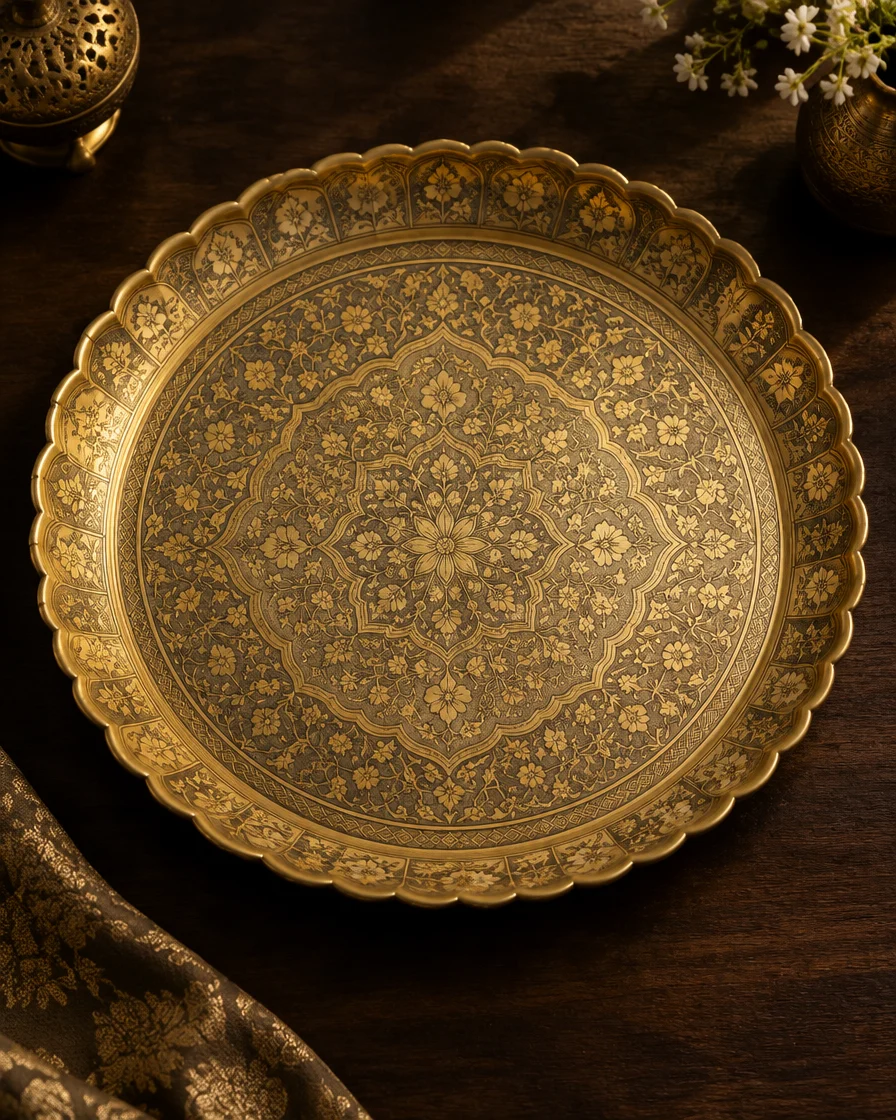
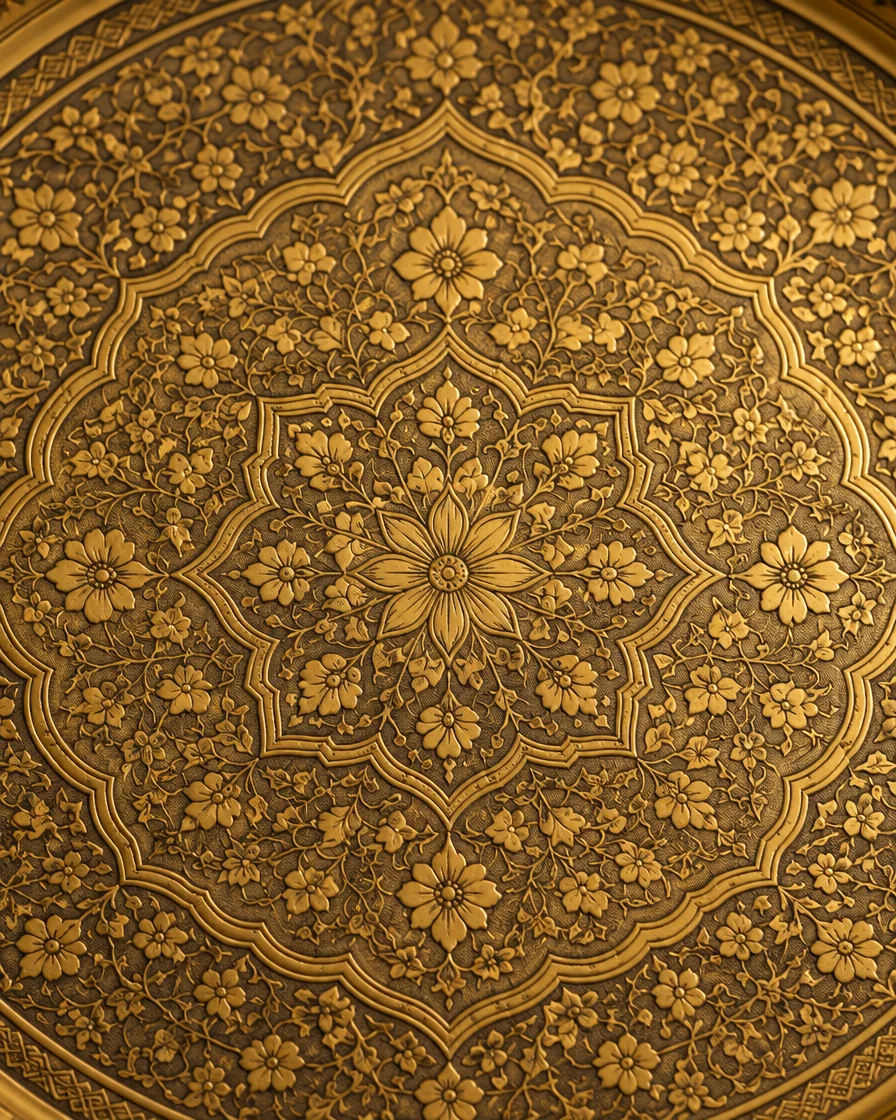
Zarmeera’s Heritage Gold Craft range includes tableware and dining pieces such as goblets and tumblers, tea sets, bowls and serving trays. Every piece is made to order, the photographs are representative images, and prices are not published. The material, weight and size are not shown on the product pages, so ask for them in your inquiry or in a commission request. The questions above are a good list to paste into that message.
Frequently asked questions
Is gold tableware made of solid gold?
Not necessarily. Gold tableware can be solid gold, a base metal with a gold plated or gold leaf finish, or something in between. The seller should state which, and the karat of any gold used.
Is gold tableware safe to eat and drink from?
Pure gold is chemically very stable, but the safety of a piece depends on everything it is made of, including the base metal beneath a gold layer and any decoration. Ask the maker directly whether the surfaces that touch food and drink are suitable for that use.
How do I clean gold tableware?
Ask the maker for care instructions for that exact piece. As a general rule, wash gently by hand with mild soap and warm water, avoid abrasive cleaners and bleach, and dry with a soft cloth.
Why are gold tableware prices not listed on the website?
Made-to-order pieces vary with the material, weight, size and design you choose. On Zarmeera every piece shows Price on request, and you receive a quotation by email after you send an inquiry.
Ready to ask?
Prices are not published on this website. Tell us what you are looking for and we reply by email with prices, availability and next steps.