Short answer
Gold jewellery imported into the UAE for local sale pays customs duty of 5% of its CIF value, and 5% VAT, which a VAT-registered importer accounts for in its VAT return. Pakistan has no trade agreement with the UAE in force that removes the duty. The jewellery must be hallmarked by the Dubai Central Laboratory before sale in Dubai, and the importer must follow the UAE's AML rules for dealers in precious metals.
Many jewellers in Dubai and the other emirates sell Pakistani designs, and buying direct from a maker in Pakistan cuts out a layer of trading. Before the first order, it helps to know what the UAE charges and checks when the jewellery arrives. This guide covers customs duty, VAT, documents, hallmarking and the anti-money-laundering rules that apply to jewellery traders.
Rules and rates change. Treat this guide as a starting point and confirm the details for your shipment with your customs broker and tax adviser.
At a glance
| Item | What applies in the UAE |
|---|---|
| Customs duty | 5% of the CIF value for jewellery sold in the UAE |
| VAT on import | 5%, accounted for in the VAT return by registered importers |
| VAT between traders | Reverse charge between VAT-registered businesses |
| Hallmark | Dubai Central Laboratory hallmark before sale in Dubai |
| AML | Dealers in precious metals must register on goAML and identify customers |
Who can import
Gold jewellery for sale is commercial goods, so it must be imported by a UAE business whose trade licence covers jewellery or precious metals trading, either directly or through a customs broker. The importer needs a customs registration, such as an importer code with Dubai Customs, and in practice a VAT registration with the Federal Tax Authority so that import VAT can be handled through its tax return.
Jewellery imported into a free zone, such as those used by Dubai’s gold and jewellery traders, can have duty suspended until the goods enter the UAE mainland. Ask your broker whether a free zone route suits your business.
Customs duty: 5% of CIF
Since January 2017, gold jewellery imported for sale in the UAE has paid customs duty of 5%. The UAE charges customs duty on the CIF value: the cost of the goods plus insurance and freight. For example, a consignment with a CIF value of AED 200,000 pays AED 10,000 in duty.
Some countries have trade agreements with the UAE that lower or remove the duty. Indian jewellery, for example, can enter at a lower rate under the India-UAE CEPA when it has a certificate of origin. Pakistan does not yet have such an agreement in force. Pakistan and the UAE have been negotiating a Comprehensive Economic Partnership Agreement, and Pakistan and the GCC a free trade agreement, but neither had been signed as of the latest reports. Until one is in force, budget for the full 5% duty when you compare a Pakistani supplier with others.
VAT on import and between traders
The UAE charges 5% VAT. A VAT-registered importer accounts for the VAT on imported goods in its VAT return rather than paying it at the border, and can usually recover it as input tax. An unregistered importer pays the VAT before the goods are released.
When the jewellery is sold on to another trader, a separate rule applies. Under Cabinet Decision No. 127 of 2024, in force since 25 February 2025, sales of gold jewellery between VAT-registered businesses use the reverse charge mechanism: the seller does not charge VAT, and the buyer accounts for it in its own return. The buyer must give the seller written declarations that it is registered with the Federal Tax Authority and is buying for resale or manufacture. The rule covers jewellery where the precious metal or stones are worth more than the other materials. Sales to consumers carry 5% VAT in the normal way.
Documents for each shipment
For customs clearance in the UAE, prepare:
- a commercial invoice listing each item with its HS code, gross weight, gold purity (for example 22K / 916) and value;
- a packing list;
- a certificate of origin;
- the airway bill or other transport document;
- any permits required for restricted goods.
Gold jewellery falls under heading 7113 of the Harmonized System; confirm the full code with your broker. The goods should leave Pakistan with the export documents required there, and the exporter should be registered with TDAP. Our guide to buying gold jewellery wholesale from Pakistan explains the Pakistani side.
Hallmarking before sale
Gold sold by licensed retailers in Dubai must carry a hallmark approved by the Dubai Central Laboratory, part of Dubai Municipality. The mark shows the karat, the manufacturer’s mark and a certification number. Plan time for testing and hallmarking after the goods clear customs, and agree with your supplier the purity of every piece in writing, so that the test results match the invoice. Our guide to 22K, 21K and 18K in Dubai and the GCC explains how each purity is used.
Anti-money-laundering checks
UAE jewellery traders are dealers in precious metals and stones, supervised for anti-money-laundering purposes by the Ministry of Economy. They must register on goAML, the UAE’s reporting platform. For transactions of AED 55,000 or more, they must identify the customer: an Emirates ID or passport for individuals, and a trade licence and representative’s ID for companies. Records must be kept for at least five years. A reliable supplier will expect these checks and provide its own company documents.
Hand-carrying jewellery
Personal jewellery worn by a traveller is treated differently from goods for sale. Jewellery brought in for resale is commercial goods and must be declared and cleared through customs with duty paid. Travellers carrying precious metals or stones worth more than AED 60,000 must declare them. For trade quantities, insured air cargo cleared by a broker is usually the safer route; our shipping checklist covers insurance and packing.
Working out your landed cost
To compare a Pakistani supplier with a local one, add up:
- the price of the jewellery, quoted as gold value plus making charge;
- insured freight to the UAE;
- customs duty at 5% of the CIF value;
- broker and clearance fees;
- testing and hallmarking.
VAT is usually recoverable for a registered importer, so it affects cash flow more than cost.
Ordering from Zarmeera
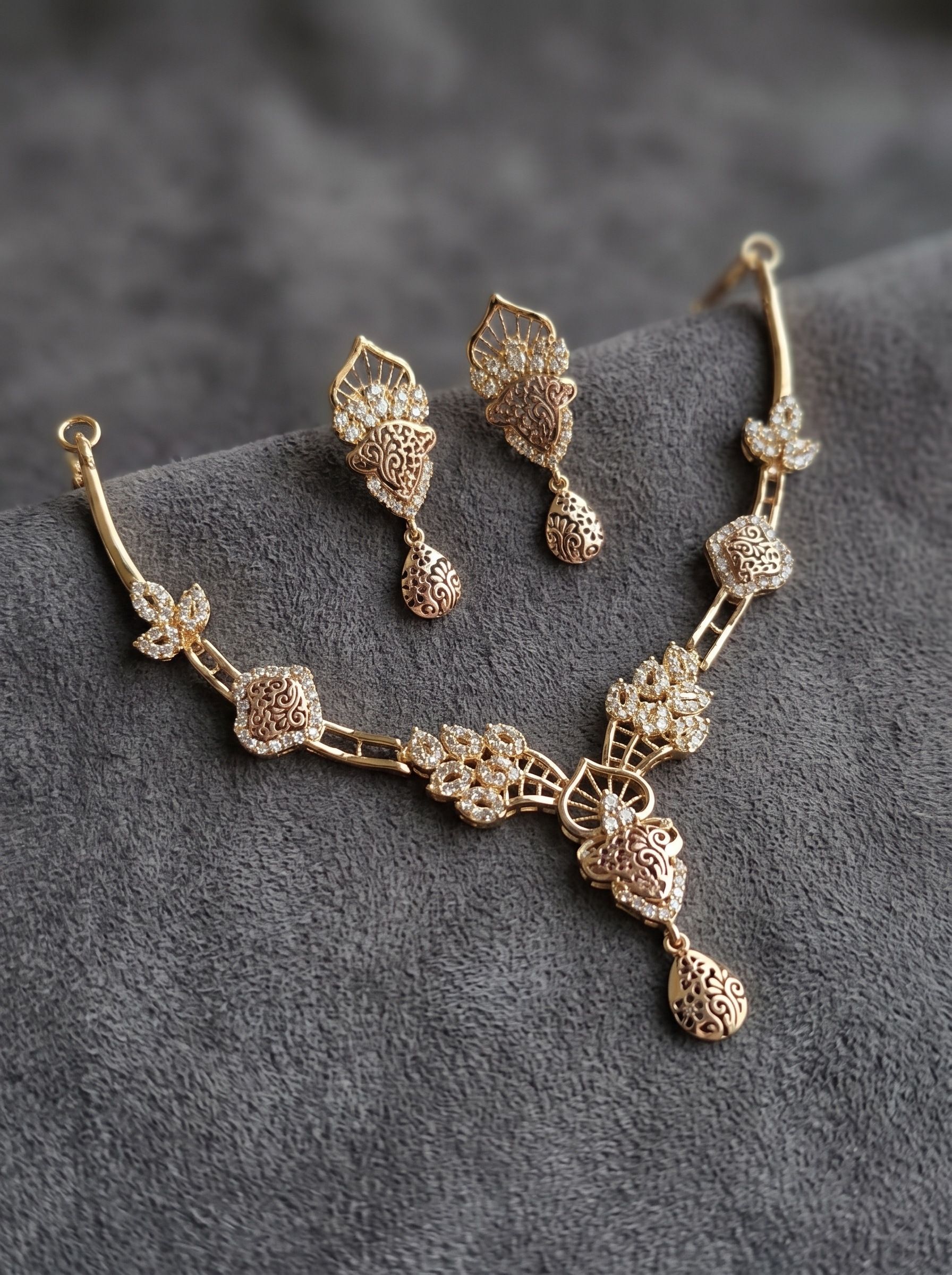
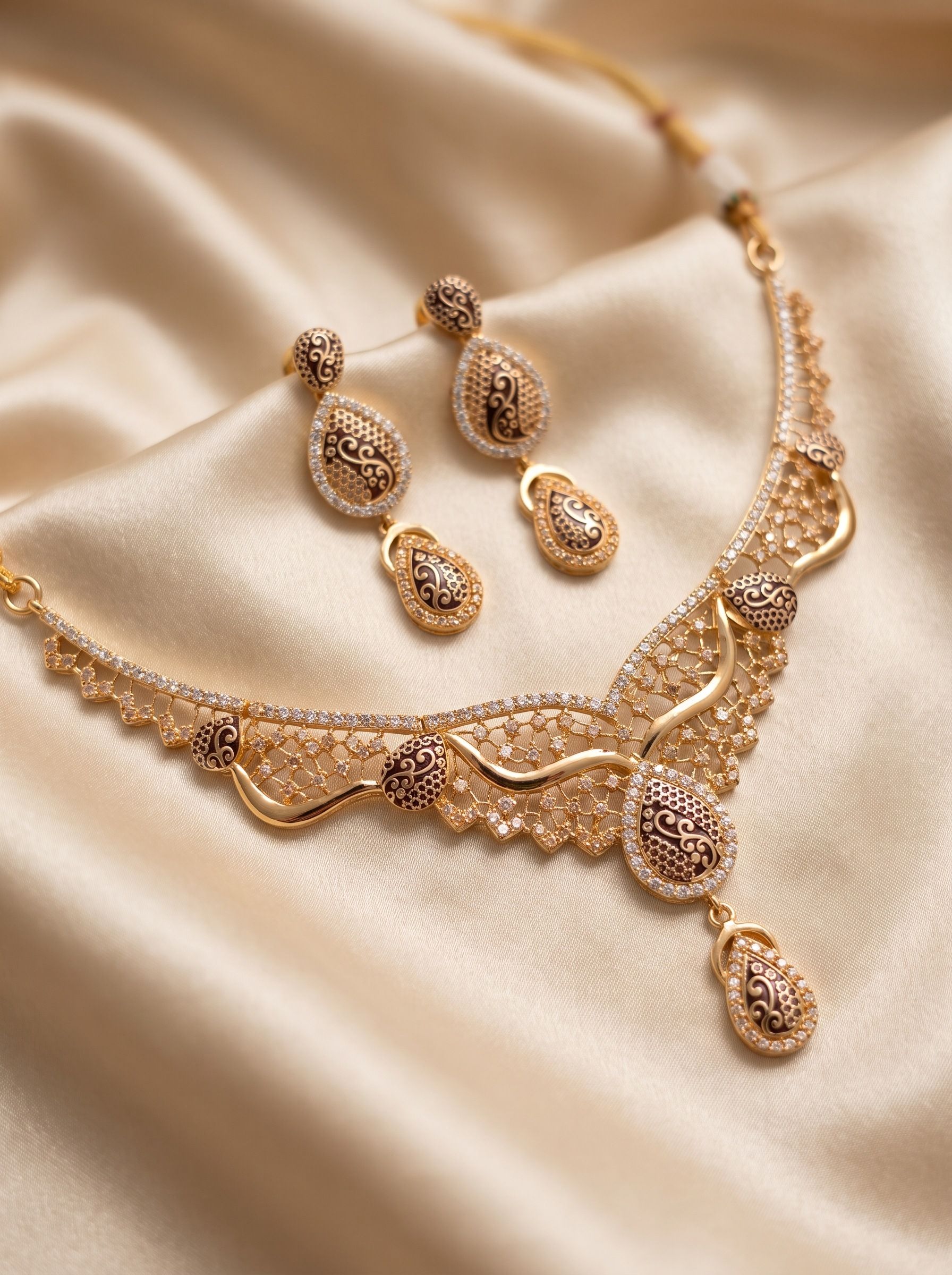
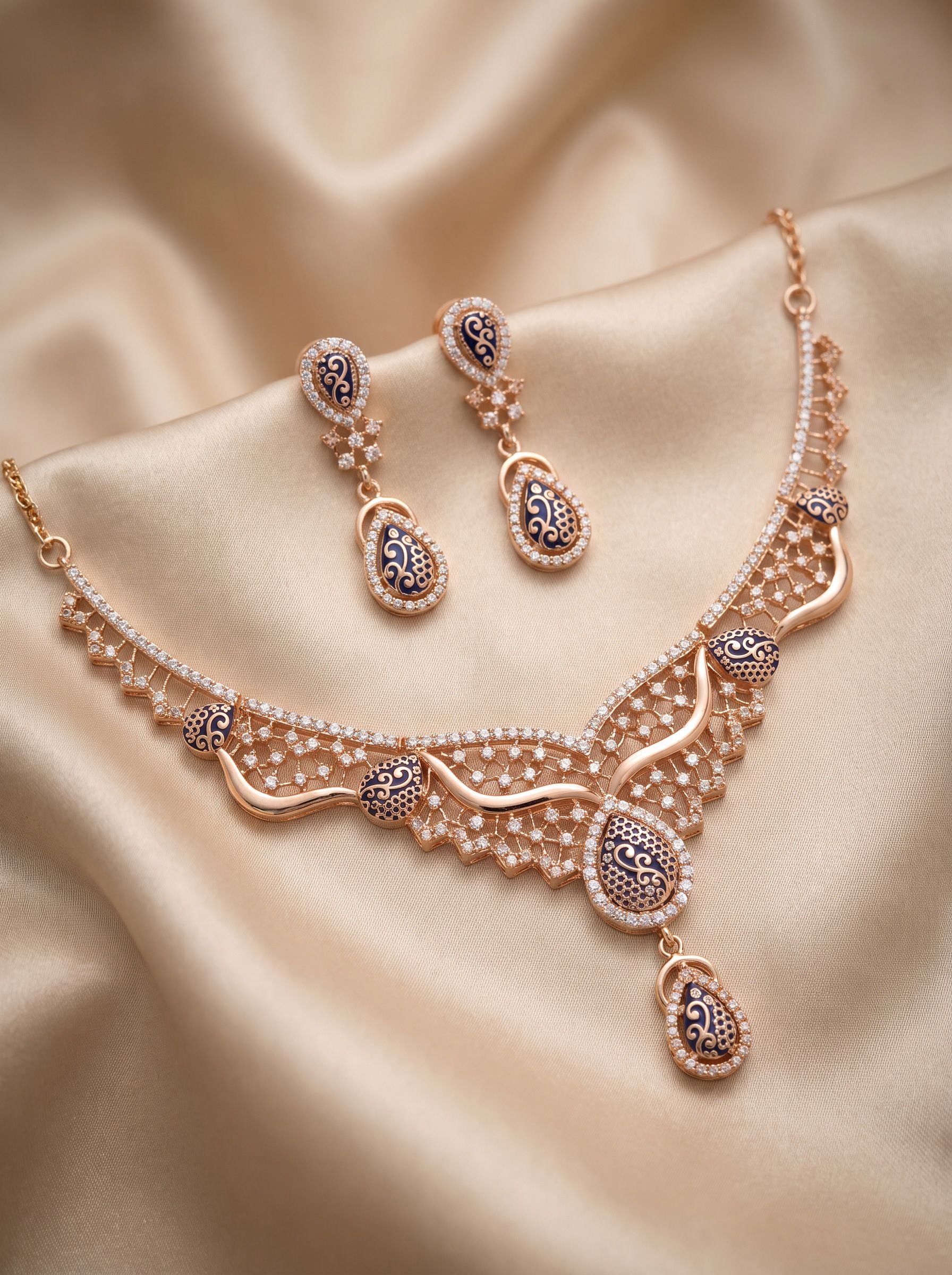
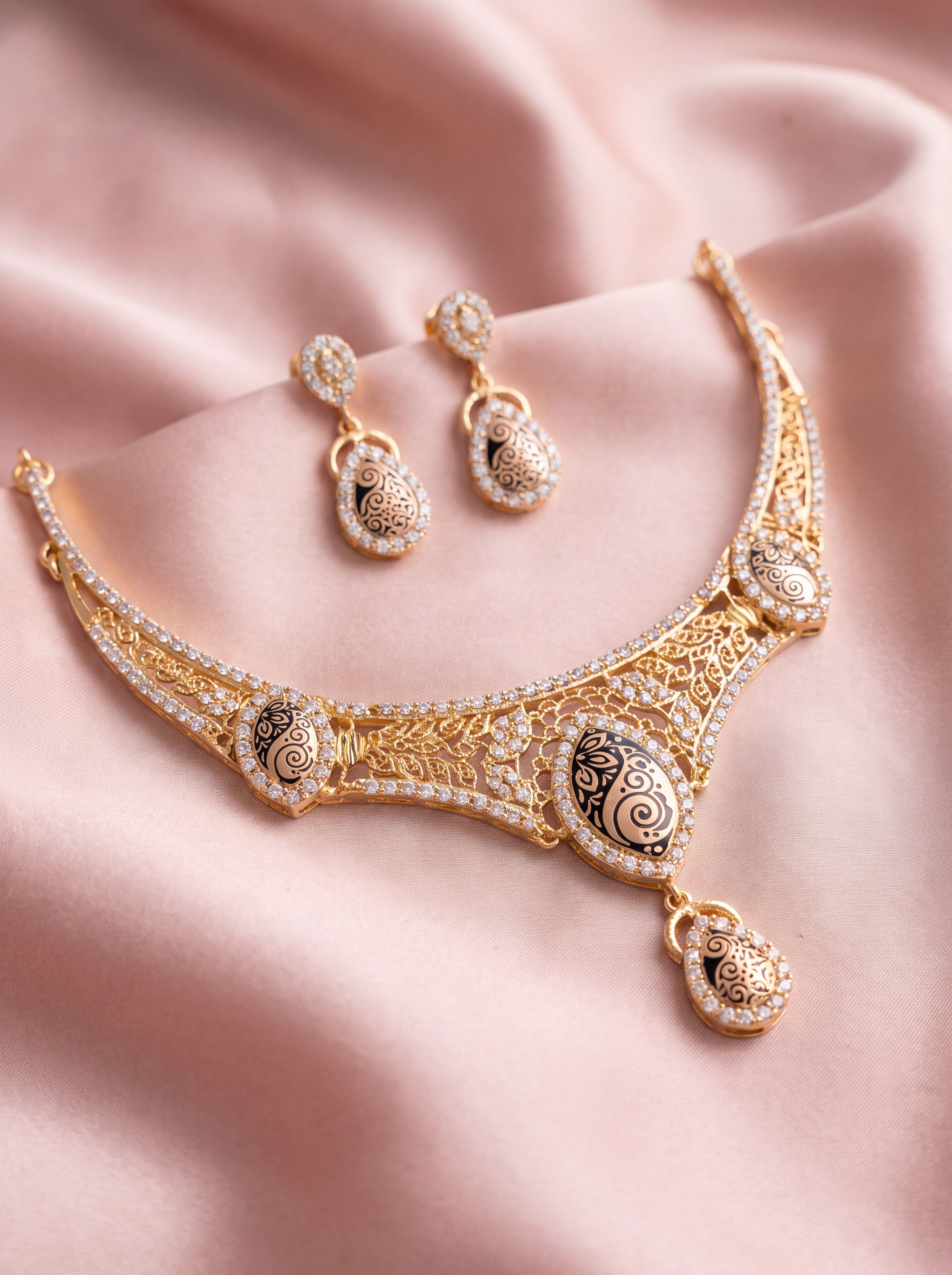
Zarmeera Fine Jewellery makes 22K (916) gold jewellery in Karachi and supplies jewellery shops and traders in Dubai and the other GCC countries. We are registered for export with TDAP and Pakistan Single Window, and we confirm the shipping method, export documents and delivery time with each quotation, before you place the order. Pieces are made to order in 21K (875) and 18K (750), and the trade minimum is 500 grams, combining different designs.
Read about ordering from Dubai, see our trade terms, or browse the necklace sets and send an inquiry list.
Frequently asked questions
What is the customs duty on gold jewellery imported into the UAE?
Gold jewellery imported for sale in the UAE pays customs duty of 5%, calculated on the CIF value (cost, insurance and freight). The 5% duty on jewellery has applied since January 2017. Jewellery from countries with a trade agreement in force, such as India under the India-UAE CEPA, can enter at a lower rate with a certificate of origin.
Is there a trade agreement that removes duty on jewellery from Pakistan?
Not yet. Pakistan and the UAE have been negotiating a Comprehensive Economic Partnership Agreement, and Pakistan and the GCC a free trade agreement, but neither had been signed as of the latest reports. Until one is in force, plan for the standard 5% duty.
Do UAE jewellers pay VAT when buying gold jewellery from each other?
Between VAT-registered businesses, gold jewellery is sold under the reverse charge mechanism set by Cabinet Decision No. 127 of 2024, in force since 25 February 2025. The seller does not charge VAT; the buyer accounts for it in its own VAT return, after giving the seller the required declarations.
Does imported gold jewellery need a hallmark in Dubai?
Yes. Gold sold by licensed retailers in Dubai must carry a hallmark approved by the Dubai Central Laboratory, showing the karat, the manufacturer's mark and a certification number.
Can I hand-carry trade jewellery from Pakistan to Dubai?
Personal jewellery is treated differently from goods for sale. Jewellery brought in for resale is commercial goods and must be declared and cleared through customs with duty paid. Travellers carrying precious metals or stones worth more than AED 60,000 must declare them.
Ready to ask?
Prices are not published on this website. Tell us what you are looking for and we reply by email with prices, availability and next steps.